
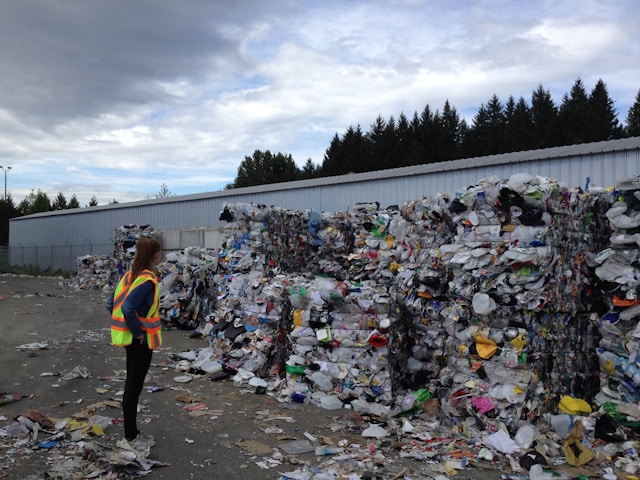
Plastic touches almost everything we consume, and few materials illustrate the gap between convenience and consequence better than PET (polyethylene terephthalate). It’s the clear, lightweight plastic behind most water and soda bottles, food jars, and a growing share of clothing fibers. Its recycled counterpart, rPET, is increasingly positioned as one of the most practical tools we have for cutting the plastic industry’s environmental footprint — but the two materials are not interchangeable when it comes to their impact on the planet.
This guide breaks down what PET and rPET actually are, how their environmental footprints compare, what’s happening to plastic waste globally and across East Africa in 2026, and why the shift toward recycled plastic matters more than ever for coastal, tourism-dependent economies like Zanzibar’s.
What Is PET, and Why Is It Everywhere?
PET is a thermoplastic polyester valued for being lightweight, durable, transparent, and resistant to moisture — qualities that made it the packaging industry’s default choice for beverages and food. Roughly 40% of PET produced worldwide goes into packaging, while the majority is spun into polyester fibers for textiles, meaning the plastic bottle problem and the “fast fashion” problem are, chemically speaking, closely related. Virgin PET is manufactured entirely from fossil fuel feedstocks through an energy-intensive process of oil extraction, refining, and polymerization — each stage adding to its carbon footprint before the material ever becomes a bottle.
What Is rPET, and How Is It Different?
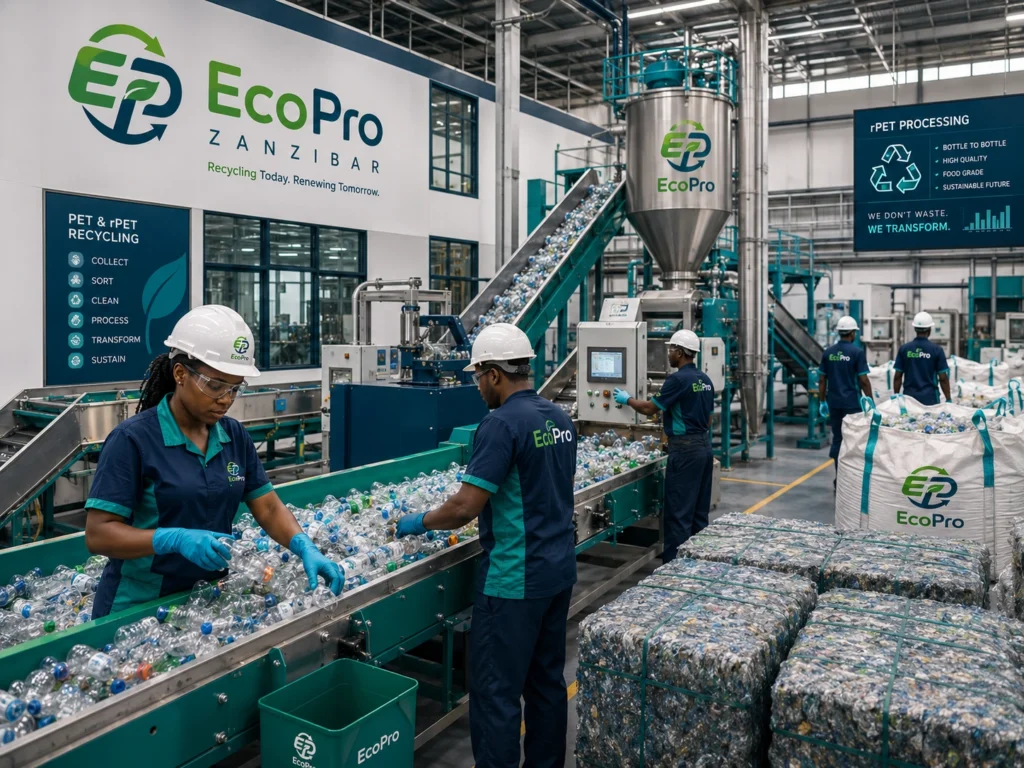
rPET, or recycled PET, is created by collecting used PET products — mainly bottles and containers — then sorting, shredding, washing, and reprocessing them into flakes or pellets that can be remanufactured into new packaging, fiber, or containers. Unlike virgin PET, rPET production skips the fossil-fuel extraction and initial polymerization stages entirely, which is where most of its environmental advantage comes from. High-quality rPET now performs comparably to virgin PET in strength, clarity, and food-grade safety, which has made it viable across far more product categories than it was a decade ago.
The Environmental Case for rPET: The Numbers
The gap between virgin PET and rPET isn’t marginal — it’s one of the clearer sustainability wins in the plastics industry, and the data has become more consistent as recycling technology has matured:
- Energy use: Producing rPET requires up to 59–79% less energy than manufacturing virgin PET, since it bypasses the extraction and refining of raw fossil fuel feedstocks.
- Carbon emissions: Independent lifecycle assessments have found that rPET can cut greenhouse gas emissions by roughly 60–79% compared with virgin PET, depending on the recycling process and regional energy mix.
- Water consumption: Closed-loop rPET recycling can reduce water usage in production by close to half compared with virgin plastic manufacturing.
- Landfill and ocean diversion: Every tonne of PET recycled into rPET is a tonne that doesn’t end up in a landfill, an incinerator, or a waterway — directly reducing the volume of new plastic entering the environment.
For companies under pressure to cut Scope 3 emissions and meet net-zero commitments, switching packaging to recycled content is one of the fastest, most measurable levers available — no new infrastructure or product redesign required.
The Scale of the Global Plastic Problem in 2026
Understanding why rPET matters requires understanding just how large the plastic problem has become:
- Global plastic production now exceeds 400 million tonnes annually, and demand is still climbing, with production forecast to keep rising through 2050 absent stronger policy intervention.
- Despite decades of recycling campaigns, the global average plastic recycling rate remains under 20%, with the vast majority of plastic ever made still existing in landfills, incinerators, or the natural environment.
- PET remains the exception that proves the rule: it’s the most commonly recycled plastic type worldwide, accounting for over half of global plastic recycling — proof that when collection infrastructure exists, PET recycling works at scale.
- An estimated 8–11 million tonnes of plastic enter the ocean every year, harming marine ecosystems, fisheries, and the communities that depend on them.
- Plastic production and disposal are responsible for a meaningful share of global greenhouse gas emissions, tying the plastic crisis directly to the broader climate crisis rather than treating it as a separate issue.
Zanzibar and East Africa: A Frontline for Plastic Pollution
Nowhere is the connection between plastic waste and economic wellbeing clearer than in tourism-dependent coastal economies like Zanzibar’s. Tourism contributes close to 28% of Zanzibar’s GDP and 82% of its foreign exchange earnings, and the sector’s rapid growth has driven a parallel surge in single-use plastic waste — bottled water, food packaging, and disposable amenities — that local waste systems were never built to absorb.
Research surveying Zanzibar’s coastal tourism sites has confirmed that plastic debris is present at every surveyed location, with single-use packaging the most common litter type found on beaches. A World Bank-backed study estimated the annual economic cost of marine plastic pollution across Dar es Salaam and Zanzibar at roughly $28 million, with two-thirds of that cost borne directly by the tourism industry — the same industry the plastic waste is generated by.
The response has been accelerating. Through 2026, the IslandPlas project, led by IUCN Tanzania with support from The Coca-Cola Foundation, has opened new community plastic collection hubs across Unguja and Pemba, working alongside the Zanzibar Environmental Management Authority to move the archipelago toward a coordinated circular economy — collecting, sorting, and reintegrating plastic waste into the economy rather than losing it to the ocean. Wider regional data on the East African Community’s plastic waste burden shows the same pattern repeating across Kenya, Tanzania, Uganda, and neighboring states: stormwater runoff and inadequate collection infrastructure are the primary pathways carrying land-based plastic into rivers, lakes, and ultimately the Indian Ocean.
Why the Circular Economy Matters More Than Recycling Alone
rPET is only as effective as the collection system feeding it. A genuine circular economy for PET depends on three things working together: consistent collection of post-consumer bottles, sorting infrastructure capable of separating PET from contaminating materials, and manufacturing demand for recycled content strong enough to make collection economically worthwhile for waste pickers and recyclers. Where any one link is missing — as is common across parts of East Africa — otherwise recyclable PET ends up landfilled, burned, or washed into waterways instead.
This is also where policy levers like Extended Producer Responsibility (EPR) are gaining traction. EPR schemes make the companies that produce or import plastic packaging financially responsible for its collection and end-of-life management, shifting the economics of recycling in favor of building durable local collection networks rather than relying on informal or underfunded systems.
Beyond Bottles: PET, rPET, and the Textile Connection
Because roughly 60% of PET manufactured worldwide is spun into polyester textile fibers rather than bottles, the fashion industry is quietly one of the largest consumers — and polluters — in the PET supply chain. Recycled polyester made from post-consumer rPET can cut carbon emissions by an estimated 45–70% compared with virgin polyester, giving apparel brands a comparable environmental lever to the one available in packaging. For rPET processors, this overlap between packaging-grade and textile-grade recycling represents a genuine growth opportunity: the same collected bottle stream can be routed toward whichever end market delivers the greatest environmental and economic return.
What Businesses and Communities Can Do
- Choose rPET over virgin PET wherever packaging specifications allow — the energy and emissions savings are immediate and measurable.
- Support local collection infrastructure, whether through formal EPR participation or partnerships with community collection hubs and informal waste pickers, who remain the backbone of plastic recovery across much of East Africa.
- Design for recyclability from the outset — mono-material PET packaging without mixed-material labels or caps is significantly easier and cheaper to recycle at scale.
- Track and disclose recycled content in packaging and products, both to meet tightening regulatory expectations and to give consumers an honest basis for comparison.
The Bottom Line
The data is consistent across every major study: rPET dramatically outperforms virgin PET on energy use, carbon emissions, and water consumption, while directly reducing the volume of plastic that would otherwise reach landfills, rivers, and oceans. For coastal, tourism-driven economies like Zanzibar’s, closing the loop on PET isn’t an abstract sustainability goal — it’s a direct investment in the beaches, reefs, and marine ecosystems the local economy depends on. As collection infrastructure and EPR policy continue to mature across East Africa through 2026 and beyond, the businesses and communities that build rPET into their supply chains today will be the ones best positioned for the regulatory and consumer expectations of tomorrow.
Sources: Our World in Data – Plastic Pollution, US EPA – Plastics Material-Specific Data, IUCN – IslandPlas Zanzibar, ScienceDirect – Zanzibar Coastal Plastics Study, MDPI – Zanzibar Tourism Waste Management, ScienceDirect – EAC Plastic Waste, University of Wollongong – Marine Plastic Pollution Tourism Costs.
rPET vs. PET: The Environmental Impact of Plastic Recycling in 2026
Plastic touches almost everything we consume, and few materials illustrate the gap between convenience and consequence better than PET (polyethylene terephthalate). It’s the clear, lightweight plastic behind most water and soda bottles, food jars, and a growing share of clothing fibers. Its recycled counterpart, rPET, is increasingly positioned as one of the most practical tools we have for cutting the plastic industry’s environmental footprint — but the two materials are not interchangeable when it comes to their impact on the planet.
This guide breaks down what PET and rPET actually are, how their environmental footprints compare, what’s happening to plastic waste globally and across East Africa in 2026, and why the shift toward recycled plastic matters more than ever for coastal, tourism-dependent economies like Zanzibar’s.
What Is PET, and Why Is It Everywhere?
PET is a thermoplastic polyester valued for being lightweight, durable, transparent, and resistant to moisture — qualities that made it the packaging industry’s default choice for beverages and food. Roughly 40% of PET produced worldwide goes into packaging, while the majority is spun into polyester fibers for textiles, meaning the plastic bottle problem and the “fast fashion” problem are, chemically speaking, closely related. Virgin PET is manufactured entirely from fossil fuel feedstocks through an energy-intensive process of oil extraction, refining, and polymerization — each stage adding to its carbon footprint before the material ever becomes a bottle.
What Is rPET, and How Is It Different?
rPET, or recycled PET, is created by collecting used PET products — mainly bottles and containers — then sorting, shredding, washing, and reprocessing them into flakes or pellets that can be remanufactured into new packaging, fiber, or containers. Unlike virgin PET, rPET production skips the fossil-fuel extraction and initial polymerization stages entirely, which is where most of its environmental advantage comes from. High-quality rPET now performs comparably to virgin PET in strength, clarity, and food-grade safety, which has made it viable across far more product categories than it was a decade ago.
The Environmental Case for rPET: The Numbers
The gap between virgin PET and rPET isn’t marginal — it’s one of the clearer sustainability wins in the plastics industry, and the data has become more consistent as recycling technology has matured:
- Energy use: Producing rPET requires up to 59–79% less energy than manufacturing virgin PET, since it bypasses the extraction and refining of raw fossil fuel feedstocks.
- Carbon emissions: Independent lifecycle assessments have found that rPET can cut greenhouse gas emissions by roughly 60–79% compared with virgin PET, depending on the recycling process and regional energy mix.
- Water consumption: Closed-loop rPET recycling can reduce water usage in production by close to half compared with virgin plastic manufacturing.
- Landfill and ocean diversion: Every tonne of PET recycled into rPET is a tonne that doesn’t end up in a landfill, an incinerator, or a waterway — directly reducing the volume of new plastic entering the environment.
For companies under pressure to cut Scope 3 emissions and meet net-zero commitments, switching packaging to recycled content is one of the fastest, most measurable levers available — no new infrastructure or product redesign required.
The Scale of the Global Plastic Problem in 2026
Understanding why rPET matters requires understanding just how large the plastic problem has become:
- Global plastic production now exceeds 400 million tonnes annually, and demand is still climbing, with production forecast to keep rising through 2050 absent stronger policy intervention.
- Despite decades of recycling campaigns, the global average plastic recycling rate remains under 20%, with the vast majority of plastic ever made still existing in landfills, incinerators, or the natural environment.
- PET remains the exception that proves the rule: it’s the most commonly recycled plastic type worldwide, accounting for over half of global plastic recycling — proof that when collection infrastructure exists, PET recycling works at scale.
- An estimated 8–11 million tonnes of plastic enter the ocean every year, harming marine ecosystems, fisheries, and the communities that depend on them.
- Plastic production and disposal are responsible for a meaningful share of global greenhouse gas emissions, tying the plastic crisis directly to the broader climate crisis rather than treating it as a separate issue.
Zanzibar and East Africa: A Frontline for Plastic Pollution
Nowhere is the connection between plastic waste and economic wellbeing clearer than in tourism-dependent coastal economies like Zanzibar’s. Tourism contributes close to 28% of Zanzibar’s GDP and 82% of its foreign exchange earnings, and the sector’s rapid growth has driven a parallel surge in single-use plastic waste — bottled water, food packaging, and disposable amenities — that local waste systems were never built to absorb.
Research surveying Zanzibar’s coastal tourism sites has confirmed that plastic debris is present at every surveyed location, with single-use packaging the most common litter type found on beaches. A World Bank-backed study estimated the annual economic cost of marine plastic pollution across Dar es Salaam and Zanzibar at roughly $28 million, with two-thirds of that cost borne directly by the tourism industry — the same industry the plastic waste is generated by.
The response has been accelerating. Through 2026, the IslandPlas project, led by IUCN Tanzania with support from The Coca-Cola Foundation, has opened new community plastic collection hubs across Unguja and Pemba, working alongside the Zanzibar Environmental Management Authority to move the archipelago toward a coordinated circular economy — collecting, sorting, and reintegrating plastic waste into the economy rather than losing it to the ocean. Wider regional data on the East African Community’s plastic waste burden shows the same pattern repeating across Kenya, Tanzania, Uganda, and neighboring states: stormwater runoff and inadequate collection infrastructure are the primary pathways carrying land-based plastic into rivers, lakes, and ultimately the Indian Ocean.
Why the Circular Economy Matters More Than Recycling Alone
rPET is only as effective as the collection system feeding it. A genuine circular economy for PET depends on three things working together: consistent collection of post-consumer bottles, sorting infrastructure capable of separating PET from contaminating materials, and manufacturing demand for recycled content strong enough to make collection economically worthwhile for waste pickers and recyclers. Where any one link is missing — as is common across parts of East Africa — otherwise recyclable PET ends up landfilled, burned, or washed into waterways instead.
This is also where policy levers like Extended Producer Responsibility (EPR) are gaining traction. EPR schemes make the companies that produce or import plastic packaging financially responsible for its collection and end-of-life management, shifting the economics of recycling in favor of building durable local collection networks rather than relying on informal or underfunded systems.
Beyond Bottles: PET, rPET, and the Textile Connection
Because roughly 60% of PET manufactured worldwide is spun into polyester textile fibers rather than bottles, the fashion industry is quietly one of the largest consumers — and polluters — in the PET supply chain. Recycled polyester made from post-consumer rPET can cut carbon emissions by an estimated 45–70% compared with virgin polyester, giving apparel brands a comparable environmental lever to the one available in packaging. For rPET processors, this overlap between packaging-grade and textile-grade recycling represents a genuine growth opportunity: the same collected bottle stream can be routed toward whichever end market delivers the greatest environmental and economic return.
What Businesses and Communities Can Do
- Choose rPET over virgin PET wherever packaging specifications allow — the energy and emissions savings are immediate and measurable.
- Support local collection infrastructure, whether through formal EPR participation or partnerships with community collection hubs and informal waste pickers, who remain the backbone of plastic recovery across much of East Africa.
- Design for recyclability from the outset — mono-material PET packaging without mixed-material labels or caps is significantly easier and cheaper to recycle at scale.
- Track and disclose recycled content in packaging and products, both to meet tightening regulatory expectations and to give consumers an honest basis for comparison.
The Bottom Line
The data is consistent across every major study: rPET dramatically outperforms virgin PET on energy use, carbon emissions, and water consumption, while directly reducing the volume of plastic that would otherwise reach landfills, rivers, and oceans. For coastal, tourism-driven economies like Zanzibar’s, closing the loop on PET isn’t an abstract sustainability goal — it’s a direct investment in the beaches, reefs, and marine ecosystems the local economy depends on. As collection infrastructure and EPR policy continue to mature across East Africa through 2026 and beyond, the businesses and communities that build rPET into their supply chains today will be the ones best positioned for the regulatory and consumer expectations of tomorrow.
Sources: Our World in Data – Plastic Pollution, US EPA – Plastics Material-Specific Data, IUCN – IslandPlas Zanzibar, ScienceDirect – Zanzibar Coastal Plastics Study, MDPI – Zanzibar Tourism Waste Management, ScienceDirect – EAC Plastic Waste, University of Wollongong – Marine Plastic Pollution Tourism Costs.